
AI Technology Explored for Enhancing Wine Production Efficiency and Quality
AI-Summarized Article
ClearWire's AI summarized this story from Fox News into a neutral, comprehensive article.
Key Points
- Scientists developed an AI-powered "grape ripeness detector" to enhance wine production efficiency and quality.
- The technology combines AI analysis with vineyard expertise to optimize grape harvesting decisions.
- The detector aims to provide precise data on grape maturity, moving beyond subjective human assessment.
- This innovation seeks to help winemakers produce better wine by ensuring optimal ripeness at harvest.
- The development reflects a broader trend of integrating AI into agriculture to improve precision and consistency.
Overview
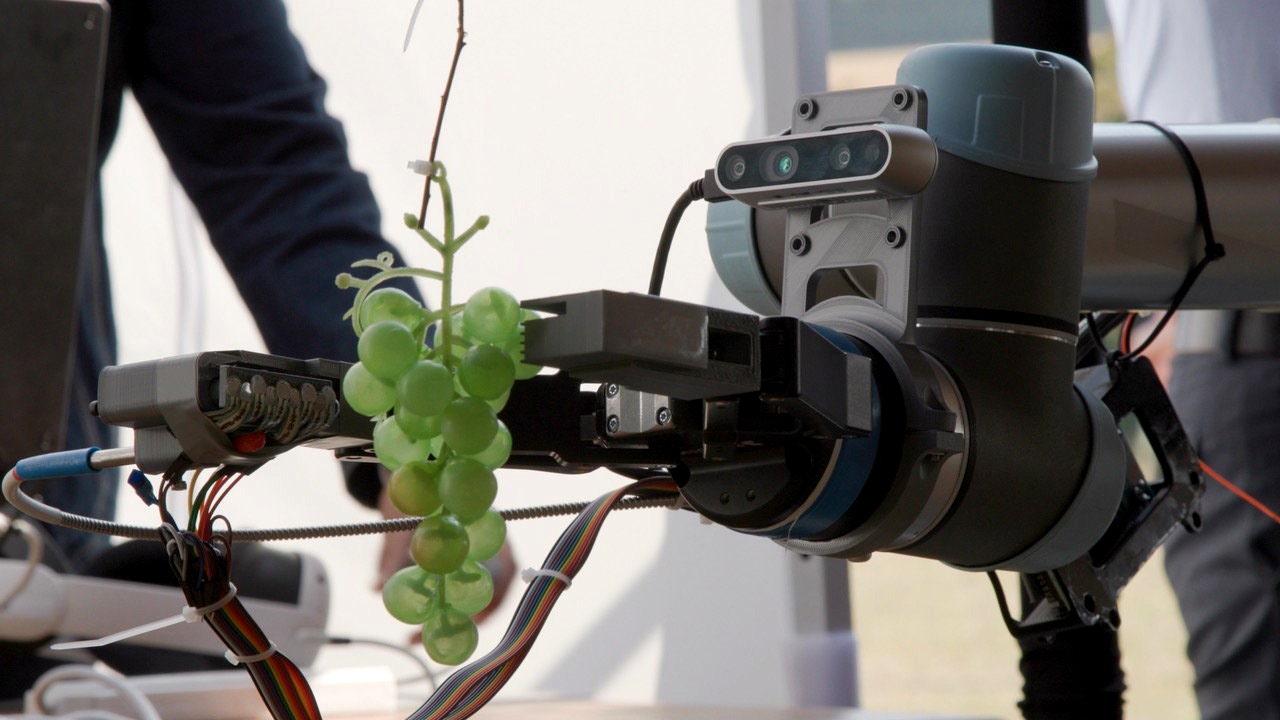
Artificial intelligence is being integrated into the wine industry, with scientists developing an AI-powered "grape ripeness detector." This technological advancement aims to streamline wine production by combining sophisticated AI analysis with traditional vineyard expertise. The primary goal is to optimize the timing of grape harvesting, which is crucial for producing high-quality wine. This innovation represents a significant step towards leveraging technology to enhance agricultural processes and ensure consistency in premium products.
The system is designed to provide winemakers with precise data on grape maturity, moving beyond subjective human assessment. By accurately identifying the optimal ripeness, the detector can help vineyards make more informed decisions, potentially leading to improved flavor profiles and overall wine quality. This development is part of a broader trend where various industries are exploring AI applications to boost efficiency and precision.
Background & Context
Winemaking has historically relied heavily on the experience and intuition of vintners, particularly regarding the critical decision of when to harvest grapes. Traditional methods often involve manual sampling and sensory evaluation, which can be time-consuming and subject to human variability. The introduction of AI seeks to complement, not replace, this human expertise by providing objective, data-driven insights.
This technological push comes as the global wine industry faces increasing pressures, including climate change impacts and the demand for consistent quality across larger scales of production. AI tools offer a potential solution to mitigate these challenges by providing predictive analytics and real-time data. The integration of such technology could standardize processes and reduce the risks associated with suboptimal harvesting decisions, which can significantly affect a vintage's success.
Key Developments
The core of this innovation is the AI-powered grape ripeness detector, which utilizes advanced algorithms to analyze various grape characteristics. While specific details of the technology are not fully provided in the snippet, such systems typically involve computer vision and machine learning to assess factors like sugar content, acidity, and phenolic ripeness. This allows for a more comprehensive and rapid evaluation compared to traditional laboratory tests or manual observation.
The detector is intended to be a practical tool for winemakers, offering actionable insights directly in the vineyard. Its development signifies a collaborative effort between scientific research and industry needs, aiming to bridge the gap between cutting-edge technology and centuries-old agricultural practices. The expectation is that this AI will enable winemakers to achieve greater control over the quality of their raw materials.
Perspectives
The integration of AI into winemaking is generally viewed as a positive development, offering a path to increased efficiency and quality control. Experts believe that while AI can provide invaluable data, human expertise will remain essential for interpreting these insights and making final decisions that align with a wine's desired style and character. The technology is seen as an aid, enhancing human capabilities rather than replacing them entirely.
This approach aligns with a broader industry perspective that embraces innovation while respecting traditional craftsmanship. The goal is to leverage AI to solve complex problems, such as optimizing harvest times across large and diverse vineyards, thereby ensuring consistency and allowing winemakers to focus on the artistry of blending and fermentation. The potential for higher quality and more consistent wine production is a compelling driver for adoption.
What to Watch
Future developments will likely focus on the widespread adoption and refinement of AI-powered grape ripeness detectors in vineyards globally. Researchers will continue to enhance the accuracy and scope of these systems, potentially integrating more environmental data and predictive modeling. The industry will be observing how these tools impact wine quality and production costs, and whether they lead to new benchmarks for excellence in winemaking.
Found this story useful? Share it:
Sources (1)
Fox News
"AI could be coming for your wine as experts turn to technology for industry overhaul"
April 11, 2026