
Scottish First Minister Swinney Suggests 2028 for Independence Referendum Amid UK Government Opposition
AI-Summarized Article
ClearWire's AI summarized this story from BBC News into a neutral, comprehensive article.
Key Points
- Scottish First Minister John Swinney suggested 2028 as a potential year for a second independence referendum.
- Any independence referendum would require official approval from the UK government via a Section 30 order.
- UK Prime Minister Sir Keir Starmer has stated he cannot envision a second vote during his time in office.
- The SNP advocates for independence, citing Brexit as a key reason for a new vote, while the UK government opposes it.
- The last Scottish independence referendum in 2014 saw 55% vote to remain part of the United Kingdom.
Overview
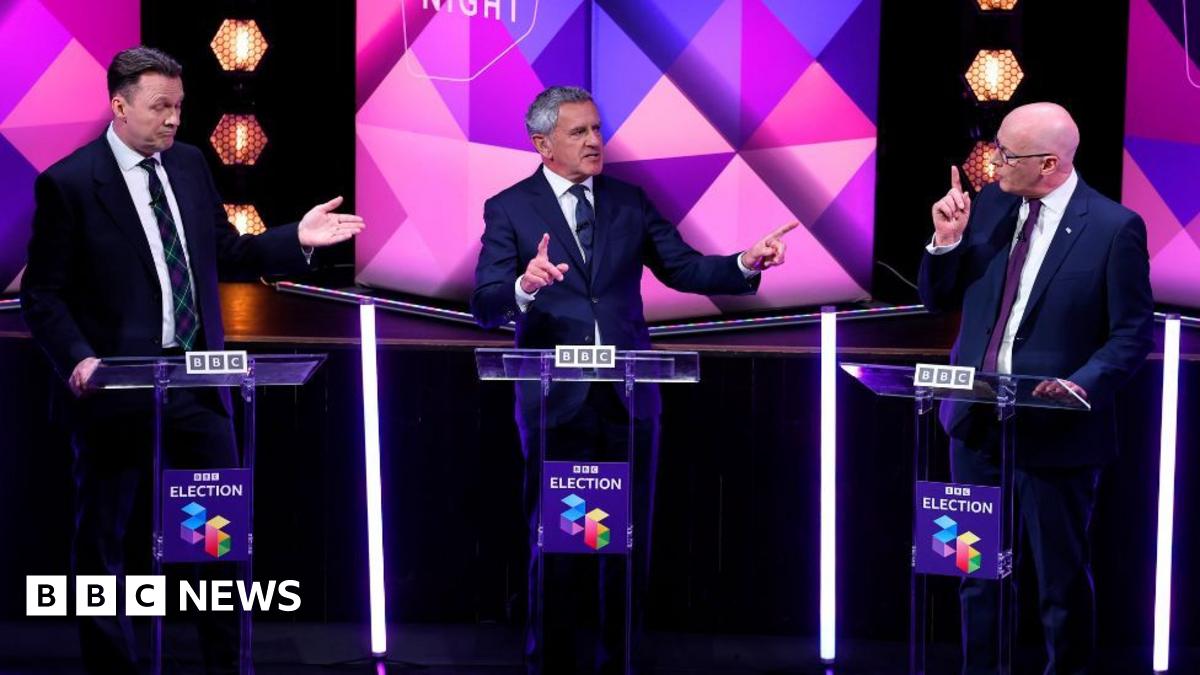
Scottish First Minister John Swinney has indicated that a second independence referendum could potentially be held in 2028. This statement was made during a Scottish leaders' debate, outlining a potential timeline for another vote on Scotland's future within the United Kingdom. However, any such referendum would require formal approval from the UK government, a significant hurdle given current political stances. The proposal reignites the long-standing debate over Scottish independence, which remains a central issue in Scottish politics.
UK Prime Minister Sir Keir Starmer has publicly stated his inability to envision a second independence vote occurring during his tenure at 10 Downing Street. This firm stance from the UK government suggests a direct conflict with the Scottish National Party's (SNP) aspirations for another referendum. The divergence in views highlights the ongoing constitutional tension between Edinburgh and London regarding Scotland's self-determination.
Background & Context
The last Scottish independence referendum took place in 2014, with 55% of voters choosing to remain part of the United Kingdom. Since then, political dynamics have shifted, particularly following the UK's departure from the European Union, a decision opposed by a majority of Scottish voters. The SNP has consistently argued that Brexit fundamentally altered the constitutional landscape, providing a new mandate for another independence vote.
John Swinney, who recently became First Minister, has reiterated the SNP's commitment to holding another referendum. The party's platform continues to prioritize independence as a means to allow Scotland to pursue different policy paths from the rest of the UK. This persistent advocacy underscores the deep-seated desire among a segment of the Scottish electorate for greater autonomy or full sovereignty.
Key Developments
During the recent Scottish leaders' debate, Swinney specifically mentioned 2028 as a possible timeframe for an independence referendum. This is one of the more concrete timelines proposed by a Scottish leader in recent years, offering a specific target for the independence movement. The suggestion aims to provide clarity and a potential roadmap for supporters of independence.
The critical condition for any referendum remains the necessity of a Section 30 order from the UK government, which would temporarily transfer the legal power to hold a vote to the Scottish Parliament. Without this order, any referendum would lack legal standing and would likely be challenged in court. The current UK government has consistently refused to grant such an order, citing the clear result of the 2014 vote.
Perspectives
The Scottish government, led by the SNP, views a second independence referendum as a democratic right and a response to evolving political circumstances, particularly Brexit. They argue that Scotland's interests are best served by rejoining the European Union as an independent nation. The proposed 2028 timeline reflects an ongoing strategic effort to keep the issue of independence at the forefront of the political agenda.
Conversely, the UK government maintains that the 2014 referendum provided a decisive result, and there is no mandate for another vote. Prime Minister Starmer's remarks underscore a firm commitment to preserving the Union, suggesting that any request for a Section 30 order would likely be denied. This fundamental disagreement sets the stage for continued political deadlock on the constitutional question.
What to Watch
Future developments will hinge on the political landscape in both Scotland and the UK. The upcoming UK general election could alter the composition and stance of the government in Westminster, potentially influencing the prospects for a Section 30 order. Additionally, public opinion polls in Scotland will be closely monitored, as sustained support for independence could increase pressure on both governments. The SNP's ongoing strategy to build a case for independence will also be a key factor to observe.
Found this story useful? Share it:
Sources (1)
BBC News
"Scottish leaders debate: Swinney says independence referendum could be held in 2028"
April 12, 2026