Elizabeth Warren Raises Concerns Over X Money While Elon Musk Announces Tesla AI Chip Developments
Compiled from 2 Sources
This report draws on coverage from Decrypt, Wccftech and presents a structured, balanced account that notes where outlets differ in their reporting.
Key Points
- Senator Elizabeth Warren expressed concerns over Elon Musk's X Money, citing risks to financial stability, consumer protection, and national security.
- Decrypt reported Warren's warning regarding X Money's planned April launch and its potential systemic impact.
- Elon Musk announced the successful tape out of Tesla's A15 AI chip via X, as reported by Wccftech.
- Musk also confirmed plans for future AI chip iterations, including the A16 and Dojo3, for Tesla.
- Warren's statements highlight regulatory scrutiny on new financial services from large tech platforms.
- Musk's announcements underscore Tesla's ongoing advancements in custom AI hardware for autonomous systems.
Introduction
Recent developments surrounding Elon Musk's diverse ventures have brought into focus both regulatory scrutiny and technological advancement. Senator Elizabeth Warren has voiced significant concerns regarding X Money, the financial services initiative planned by Musk's social media platform X, citing potential risks to consumer protection, national security, and financial stability. Concurrently, Musk has announced substantial progress in Tesla's artificial intelligence (AI) chip development, including the successful tape out of the Tesla A15 chip and plans for future iterations like the A16 and Dojo3. These parallel narratives underscore the multifaceted nature of Musk's entrepreneurial activities, spanning the highly regulated financial sector and the rapidly evolving field of advanced technology.
Key Facts
* **X Money Regulatory Concerns:** Senator Elizabeth Warren (D-MA) has formally expressed apprehension about the impending launch of X Money, a financial services platform by X (formerly Twitter). Her concerns, articulated in recent public statements, center on potential vulnerabilities related to consumer protection, national security, and the broader stability of the financial system. Warren specifically highlighted the risks associated with a large, globally integrated social media platform entering the financial sector without what she perceives as adequate regulatory oversight and safeguards.
* **Planned X Money Launch:** X Money is reportedly slated for an April launch. This initiative aims to integrate various financial functionalities, such as payments, money transfers, and potentially other banking-like services, directly into the X platform, transforming it into a "everything app."
* **Tesla AI Chip Milestones:** Elon Musk confirmed the successful "tape out" of the Tesla A15 chip. Tape out is a critical stage in semiconductor design, signifying that the chip's design is complete and ready for manufacturing. This achievement represents a significant step forward in Tesla's efforts to develop proprietary hardware for its AI and autonomous driving systems.
* **Future Tesla AI Chip Development:** Beyond the A15, Musk also announced plans for subsequent generations of Tesla's AI chips, including the A16 and Dojo3. The Dojo3 likely refers to an advancement in Tesla's Dojo supercomputer architecture, designed for training AI models, while the A16 would be the next iteration of its in-vehicle AI processors. These announcements indicate a continuous and aggressive development roadmap for Tesla's AI hardware.
* **Musk's Communication Strategy:** Elon Musk utilized his X platform to disseminate the updates regarding Tesla's AI chip progress, maintaining his characteristic direct communication style with the public and stakeholders.
Why This Matters
These developments carry significant real-world implications for various stakeholders, from individual consumers and investors to national economies and technological industries.
For **consumers**, the potential launch of X Money introduces both convenience and risk. While integrated financial services on a widely used platform could streamline transactions and communication, the concerns raised by Senator Warren highlight the critical need for robust consumer protection mechanisms. Inadequate safeguards could expose users to fraud, data breaches, or financial instability, particularly given X's global reach and potential scale. The implications extend to how personal financial data is handled, secured, and potentially monetized, which could redefine privacy expectations in digital finance.
From a **national security** perspective, the entry of a global social media platform into financial services raises questions about data sovereignty, illicit finance, and potential foreign influence. Governments worldwide are grappling with how to regulate digital currencies and cross-border payments. A platform like X, with its vast user base and international operations, could become a significant conduit for financial flows, necessitating stringent anti-money laundering (AML) and counter-terrorist financing (CTF) protocols. Failure to implement these effectively could pose risks to national security by facilitating illegal activities.
For the **financial system**, the emergence of a powerful "everything app" with integrated financial services could disrupt traditional banking and payment infrastructures. While innovation is generally welcomed, rapid, unregulated expansion by a non-traditional financial entity could introduce systemic risks, particularly if the platform were to experience financial distress or a major security breach. Regulators are tasked with balancing innovation with stability, ensuring that new players adhere to the same prudential standards as established financial institutions.
On the technological front, Tesla's advancements in AI chips are pivotal for the future of **autonomous driving and artificial intelligence**. Proprietary hardware development allows Tesla greater control over performance, efficiency, and security of its AI systems, potentially accelerating the realization of fully autonomous vehicles. This has profound implications for the automotive industry, urban planning, logistics, and even the future of work. Successful AI chip development also strengthens Tesla's position in the broader AI landscape, potentially influencing standards and capabilities across various sectors. The competition in AI hardware, particularly between companies like Tesla, Nvidia, and other tech giants, will shape the pace and direction of AI innovation globally, impacting everything from data centers to personal devices.
In essence, these two distinct stories illustrate the complex interplay between technological innovation, market disruption, and regulatory oversight in the modern economy, directly affecting how individuals manage their money, how industries evolve, and how nations secure their interests.
Full Report
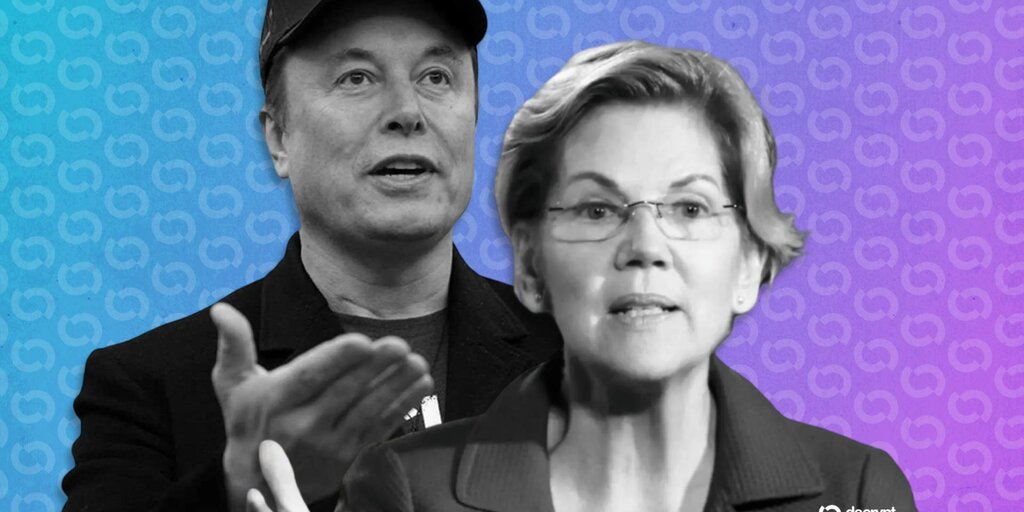
Senator Elizabeth Warren has intensified her scrutiny of X Money, the financial services arm planned by Elon Musk's X platform, ahead of its anticipated April launch. Warren's concerns, articulated in recent public statements and communications, underscore a growing apprehension among policymakers regarding the integration of financial services into large social media platforms. Specifically, she has warned that X Money could pose significant threats to consumer protection, national security, and the overall stability of the financial system.
Warren's primary argument centers on the potential for X Money to operate as a substantial financial entity without what she deems adequate regulatory safeguards. She highlighted the risks of insufficient oversight for a platform with X's global reach and user base, suggesting that such an entity could become a vector for illicit financial activities, data breaches, and systemic vulnerabilities. Her statements reflect a broader regulatory push to ensure that new financial technologies, particularly those introduced by influential tech giants, adhere to the same stringent compliance and risk management standards as traditional financial institutions. The senator's focus on consumer protection involves potential issues such as fraud, dispute resolution, and the security of user funds and personal financial data. On national security, concerns revolve around anti-money laundering (AML), counter-terrorist financing (CTF), and the potential for foreign adversaries to exploit financial channels on the platform. The systemic stability argument posits that a failure or significant disruption within a widely adopted financial service like X Money could have ripple effects across the broader financial landscape.
In a separate but equally impactful development, Elon Musk has provided an update on Tesla's progress in developing its proprietary artificial intelligence (AI) chips. Via his X account, Musk confirmed the successful "tape out" of the Tesla A15 chip. This milestone indicates that the design phase for the A15 chip is complete, and the design files have been sent to a semiconductor foundry for manufacturing. The A15 chip is expected to be a key component in enhancing Tesla's autonomous driving capabilities and overall AI performance within its vehicles.
Furthermore, Musk revealed plans for the next generation of these advanced processors, specifically mentioning the A16 and Dojo3. The A16 would represent the subsequent iteration of Tesla's in-vehicle AI hardware, promising further improvements in processing power and efficiency for tasks like real-time sensor data analysis and decision-making for self-driving. Dojo3 is understood to be an advancement in Tesla's Dojo supercomputing platform, which is designed for the massive-scale training of AI models using vast quantities of real-world driving data. These announcements underscore Tesla's strategic commitment to vertical integration, developing its own hardware to optimize AI performance and reduce reliance on external suppliers. The continuous development of custom silicon is critical for Tesla's long-term vision of achieving full self-driving capabilities and establishing itself as a leader in applied AI.
Context & Background
The regulatory scrutiny facing X Money is deeply rooted in the evolving landscape of financial technology (fintech) and the historical challenges associated with integrating financial services into non-traditional platforms. The concept of a "super app" or "everything app," popularized by platforms like WeChat in China, has long been a goal for many tech companies, including X. These apps aim to consolidate social networking, communication, e-commerce, and financial services into a single ecosystem. However, the regulatory environment in Western economies, particularly the United States, is significantly more fragmented and stringent than in some other regions, especially concerning financial services.
Senator Warren's concerns echo a broader pattern of regulatory caution exercised when large tech companies venture into finance. Historically, financial institutions have been subject to extensive oversight due to their critical role in the economy and the potential for systemic risk. The 2008 financial crisis, for instance, highlighted the dangers of under-regulated financial innovation. More recently, the rise of cryptocurrencies and decentralized finance (DeFi) has prompted similar debates about regulatory frameworks, consumer protection, and national security implications. For X Money, the challenge lies in navigating a complex web of state and federal regulations, including those from the Financial Crimes Enforcement Network (FinCEN), state money transmitter licenses, and potentially oversight from the Consumer Financial Protection Bureau (CFPB) and the Securities and Exchange Commission (SEC), depending on the scope of its services. The historical context shows that regulators are often reactive, but in the case of X Money, there is a proactive effort to address potential risks before widespread adoption.
Conversely, Tesla's pursuit of proprietary AI chips is part of a long-standing trend in the technology industry where companies seek to gain a competitive edge through vertical integration. Apple, for example, has famously developed its custom A-series chips for iPhones and M-series chips for Macs, allowing for optimized performance, power efficiency, and tighter integration between
Found this story useful? Share it:
Sources (2)
Decrypt
"Elizabeth Warren Warns Elon Musk's X Money Threatens 'Stability of the Financial System'"
April 15, 2026
Wccftech
"Tesla A15 AI Chip Taped Out, Elon Musk Shares First Pictures & Confirms A16 & Dojo3 In Works"
April 15, 2026