
Article Draws Historical Parallels Between Holocaust Remembrance and Contemporary Global Challenges
AI-Summarized Article
ClearWire's AI summarized this story from Israelnationalnews.com into a neutral, comprehensive article.
Key Points
- The article, published on Yom Hashoah, uses Holocaust Remembrance Day to emphasize history's urgent warnings.
- It draws parallels between the historical context of the Holocaust and contemporary global challenges, particularly rising fanaticism.
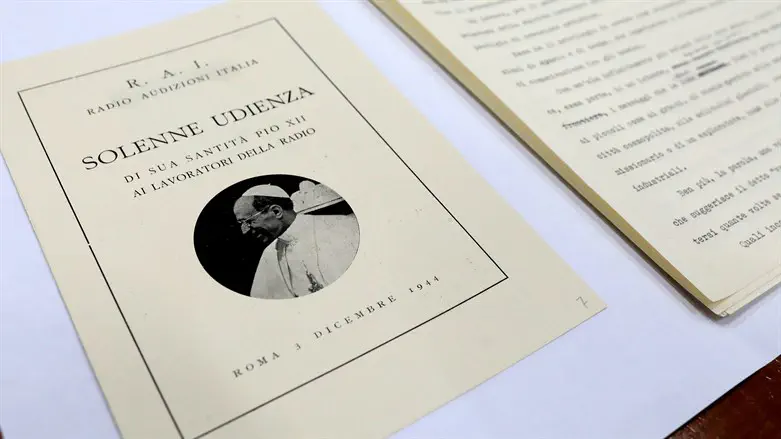
- The piece references Pope Pius XII, implicitly calling for strong moral leadership in today's world.
- History is presented not as repeating itself, but as providing crucial, often belated, warnings.
- The author expresses concern about a perceived 'regime of fanaticism' currently facing the world.
- The commentary urges active vigilance and decisive action against emerging threats, informed by historical lessons.
Overview
An article published on Israelnationalnews.com on Yom Hashoah, Holocaust Remembrance Day, emphasizes the historical lessons derived from past atrocities. The piece argues that history serves as a warning, often recognized too late, and draws a parallel between the historical context of the Holocaust and current global challenges. It specifically invokes the memory of Pope Pius XII, suggesting a contemporary need for strong moral leadership in the face of rising fanaticism.
The article's central theme is the urgent necessity to learn from historical events like the Holocaust to prevent similar tragedies. It posits that the world is currently confronting a regime of fanaticism, implying a contemporary crisis that echoes past dangers. The author's intent is to highlight the enduring relevance of Holocaust remembrance as a cautionary tale for present-day geopolitical and societal issues.
Background & Context
Yom Hashoah, Holocaust Remembrance Day, serves as the temporal backdrop for this commentary, underscoring the solemnity and historical weight of the article's message. The reference to Pope Pius XII is significant, as his papacy during World War II has been a subject of historical debate regarding the Vatican's response to the Holocaust. This historical context is leveraged to frame a discussion about leadership and moral responsibility in times of crisis.
The article implicitly suggests that the lessons from the Holocaust extend beyond mere remembrance, demanding active vigilance and decisive action against emerging threats. By invoking a historical figure whose actions during a period of immense human suffering are still scrutinized, the author prompts reflection on the role of institutions and leaders in confronting widespread fanaticism and persecution today.
Key Developments
The commentary asserts that history does not simply repeat itself but rather provides urgent warnings. This perspective is applied to the contemporary global landscape, which the article characterizes as facing a new "regime of fanaticism." This framing suggests a perceived escalation of ideological extremism and a potential threat to global stability and human rights.
The article's primary development is its call for a contemporary equivalent of moral leadership, implicitly referencing the historical criticisms leveled against Pope Pius XII. By posing the question of who will step into the role of a modern-day moral authority, the author highlights a perceived vacuum in global leadership. This rhetorical device aims to provoke thought on the responsibilities of current leaders and institutions in addressing widespread societal and political challenges.
Perspectives
The article's perspective is one of grave concern, viewing current global events through the lens of historical warnings from the Holocaust. It advocates for a proactive stance against fanaticism, suggesting that inaction or insufficient moral leadership could lead to disastrous outcomes. The author's viewpoint is strongly aligned with the idea that historical memory must inform present-day actions to prevent the recurrence of past horrors.
While not presenting differing viewpoints within the article, it broadly implies a critique of contemporary responses to global challenges. The comparison to Pope Pius XII's era serves as a stark reminder of the potential consequences of perceived moral failings or insufficient intervention. The piece urges a re-evaluation of global leadership and a renewed commitment to humanitarian principles.
What to Watch
Readers should observe how global leaders and international organizations address the rise of various forms of fanaticism and ideological extremism. Future developments will indicate whether the lessons of history, particularly those from the Holocaust, are effectively integrated into contemporary policy-making and diplomatic efforts. The ongoing debate about moral leadership in times of crisis remains a critical area for observation.
Found this story useful? Share it:
Sources (1)
Israelnationalnews.com
"Pope Leo XIV: In the footsteps of Pope Pius XII"
April 15, 2026