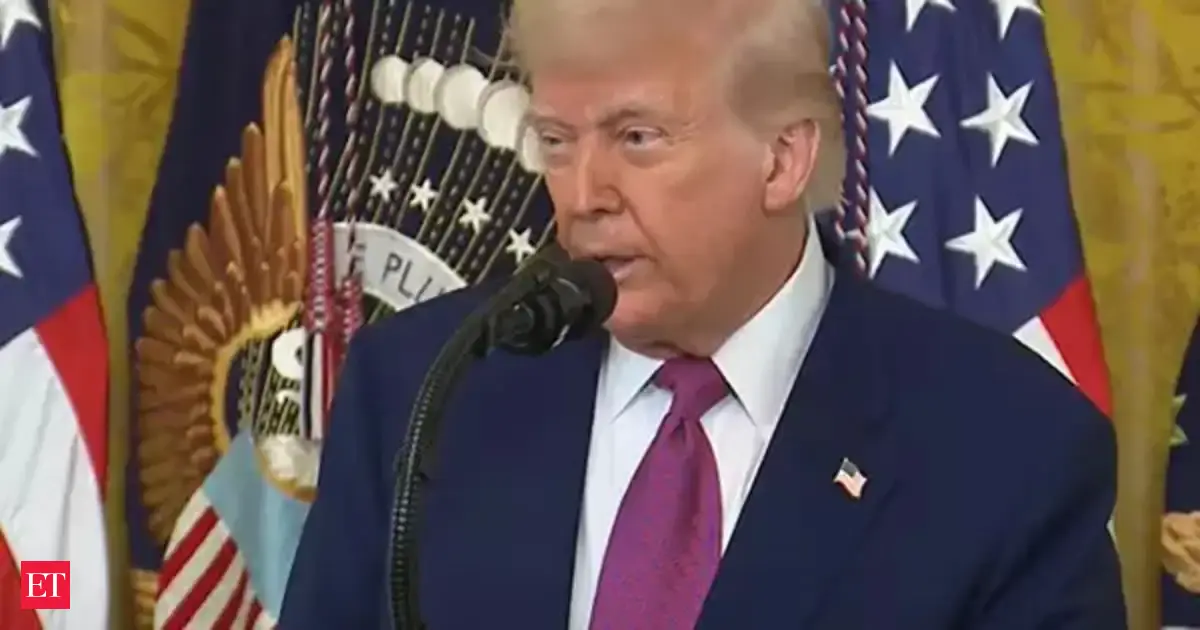
Trump Administration Initiatives: Bank Citizenship Information Order and Tariff Refund Portal
Compiled from 2 Sources
This report draws on coverage from Time, CBS News and presents a structured, balanced account that notes where outlets differ in their reporting.
Key Points
- Time reports a Trump administration order requiring banks to collect citizenship information is "in process."
- Efrén Olivares of the National Immigrant Law Center warns of non-citizens losing bank access if the order proceeds.
- CBS News states the U.S. government will launch an online portal next week for tariff refunds.
- The portal allows businesses to request refunds for tariffs deemed illegal by the Supreme Court.
- Payouts for tariff refunds will not be automatic, and legal experts anticipate a complex process.
- These reports detail two separate initiatives from the Trump administration: banking regulations and trade tariff relief.
Introduction
ClearWire News has investigated two distinct policy initiatives originating from the Trump administration, each poised to significantly impact different sectors of American society and economy. One initiative, reported by Time magazine, involves a potential directive requiring U.S. banks to collect citizenship information from account holders, a move that could profoundly alter financial access for non-citizens. The other, detailed by CBS News, concerns the imminent launch of an online portal designed to facilitate tariff refunds for businesses that overpaid duties due to tariffs later deemed illegal. These two developments, while disparate in their focus—one on immigration and financial inclusion, the other on international trade and economic relief—underscore the broad policy reach of the administration and its lasting implications.
Key Facts
* **Banking Citizenship Information:** Time magazine reported on comments from a source identified as Bessent, indicating that an order mandating U.S. banks to collect citizenship information from account holders is "in process." This potential directive has raised concerns among advocacy groups regarding its implications for non-citizens' access to banking services.
* **Impact on Non-Citizens:** Efrén Olivares, vice president of litigation and legal strategy at the National Immigrant Law Center, emphasized that if non-citizens were unable to access U.S. banks due to such a requirement, it would lead to significant repercussions, potentially forcing them into less regulated financial avenues or making it difficult to conduct basic financial transactions.
* **Tariff Refund Portal Launch:** CBS News announced that the U.S. government is scheduled to launch an online portal in the upcoming week. This portal's purpose is to enable businesses to formally request refunds for tariffs that were previously levied and subsequently ruled illegal by the Supreme Court.
* **Refund Process Complexity:** While the portal offers a mechanism for restitution, CBS News highlighted that the refund process will not be automatic. Legal experts anticipate a complex and potentially challenging process for businesses seeking to reclaim these overpaid duties, suggesting that successful claims may require significant effort and documentation.
* **Origin of Initiatives:** Both initiatives stem from the Trump administration period, reflecting its policy priorities in areas such as immigration enforcement and trade dispute resolution.
Why This Matters
The potential requirement for banks to collect citizenship information carries significant real-world implications, particularly for non-citizens residing in the United States. If implemented, such a policy could create substantial barriers to accessing fundamental financial services like opening bank accounts, obtaining loans, or even receiving wages via direct deposit. This could push non-citizens, including legal residents, visa holders, and undocumented individuals, into informal financial systems, increasing risks of fraud, theft, and exploitation, while also hindering their ability to build credit, save money, and participate fully in the economy. For the banking industry, it would necessitate significant operational changes, compliance costs, and potential reputational challenges, especially concerning privacy and discrimination. Furthermore, it could complicate international financial flows and the U.S.'s image as a global financial hub.
Conversely, the launch of the tariff refund portal directly impacts American businesses, particularly those involved in international trade. For companies that paid tariffs later deemed illegal, this portal offers a long-awaited opportunity to recoup potentially substantial financial losses. The availability of these refunds could provide crucial liquidity, support investment, and enhance the competitiveness of affected businesses, especially small and medium-sized enterprises (SMEs) that may have struggled under the burden of unexpected duties. However, the anticipated complexity of the refund process means that businesses will need to dedicate resources to navigate the system, potentially incurring legal or administrative costs. The success of this portal in delivering timely and equitable refunds will be a critical measure of the government's commitment to rectifying past trade policy impacts and supporting domestic industry.
Full Report
The Trump administration's policy landscape was characterized by a dual focus on immigration enforcement and aggressive trade renegotiation. Two distinct initiatives from this era are now coming to the forefront, each with significant implications.
On the immigration and financial access front, Time magazine has reported on an "in process" directive that would compel U.S. banks to collect citizenship information from their account holders. This potential policy, if enacted, represents a substantial departure from current banking practices, which typically focus on identity verification rather than citizenship status for routine account opening. The implications for non-citizens, including legal permanent residents, those on various visas, and undocumented individuals, are profound. Efrén Olivares of the National Immigrant Law Center has articulated concerns that such a requirement could effectively bar non-citizens from accessing mainstream banking services. This could force individuals to rely on cash transactions or alternative financial services, which often come with higher fees and fewer protections, thereby exacerbating financial exclusion and vulnerability. For banks, implementing such a system would involve considerable logistical challenges, data management complexities, and potential legal scrutiny regarding privacy and non-discrimination. The directive's status as "in process" suggests that while not yet finalized, the underlying policy intent remains active.
In parallel, the realm of international trade is seeing the implementation of a mechanism to address past policy impacts. CBS News has detailed the impending launch of an online portal designed to facilitate tariff refunds for businesses. This initiative directly responds to Supreme Court rulings that invalidated certain tariffs imposed during the Trump administration. For businesses that imported goods subject to these duties, the opportunity to reclaim overpaid funds is a critical development. These tariffs, often imposed on a wide range of products from specific countries, represented significant additional costs for importers, which were frequently passed on to consumers or absorbed by businesses, impacting profitability and pricing strategies.
However, the process for obtaining these refunds is not expected to be straightforward. CBS News, citing legal experts, indicates that payouts will not be automatic. Businesses will likely need to navigate a complex application process, providing detailed documentation of tariff payments, import records, and potentially demonstrating the direct impact of the illegal tariffs. This complexity suggests that while the portal offers a path to restitution, successful claims may require considerable administrative effort, and potentially legal assistance, especially for larger or more intricate cases. The launch of this portal signifies a tangible step towards rectifying the financial consequences of trade policies that faced legal challenges, offering a measure of relief to the affected business community.
Both initiatives, though distinct in their immediate targets and policy areas, reflect broader themes of the Trump administration: a heightened focus on national identity and border control in the case of banking regulations, and a willingness to use tariffs as a tool in international trade, followed by mechanisms to address the legal repercussions of those actions.
Context & Background
The potential order regarding citizenship information in banking aligns with a broader pattern of policies and rhetoric under the Trump administration that sought to tighten immigration controls and redefine the parameters of national identity. Throughout its tenure, the administration pursued numerous initiatives aimed at restricting immigration, enhancing border security, and increasing scrutiny of non-citizens within the U.S. This included efforts to limit access to public benefits, expand detention facilities, and increase deportations. The idea of requiring banks to collect citizenship data can be seen as an extension of this philosophy, aiming to create a more comprehensive picture of non-citizen populations and potentially limit their access to mainstream institutions. Such a requirement would represent a significant shift from the historical focus of financial regulations, which primarily center on anti-money laundering (AML) and counter-terrorism financing (CTF) measures, typically requiring identity verification rather than citizenship status. Advocacy groups, such as the National Immigrant Law Center, have consistently voiced concerns that such measures could lead to discrimination, financial exclusion, and a two-tiered financial system.
Conversely, the tariff refund portal is a direct consequence of the Trump administration's aggressive trade policy, particularly its use of Section 232 of the Trade Expansion Act of 1962 and Section 301 of the Trade Act of 1974 to impose tariffs on goods from various countries, notably China and steel/aluminum imports globally. These tariffs were often justified on grounds of national security or unfair trade practices. Many of these tariffs faced legal challenges from affected industries and international trade partners. The Supreme Court's rulings on certain tariffs, deeming them illegal or improperly applied, created a legal obligation for the U.S. government to provide a mechanism for restitution. This situation is not unprecedented in trade law, where duties collected under disputed legal authority often require a refund process if the legal challenge is successful. The establishment of an online portal is a modern administrative solution to manage what is expected to be a large volume of refund claims, aiming to streamline a process that could otherwise overwhelm traditional bureaucratic channels. It reflects a necessary administrative response to the legal outcomes of the administration's trade strategy.
What to Watch Next
For the potential banking citizenship information order, the primary development to monitor is any official announcement or proposed rule-making from relevant federal agencies, such as the Treasury Department, the Office of the Comptroller of the Currency (OCC), or the Federal Deposit Insurance Corporation (FDIC). This would signal the formal initiation of the policy. Following such an announcement, attention will shift to the public comment period, where financial institutions, civil liberties groups, and immigrant advocacy organizations will likely submit extensive feedback. Legal challenges are almost certain to follow if the order moves forward, focusing on issues of privacy, discrimination, and statutory authority. Observers should also watch for any preliminary guidance issued to banks, which would indicate how they are expected to prepare for such a requirement.
Regarding the tariff refund portal, the immediate focus will be on its launch and initial functionality. Businesses and legal experts will closely scrutinize the portal's user interface, the clarity of instructions, the required documentation, and the criteria for eligibility. The speed and efficiency with which initial claims are processed will be a key indicator of the portal's effectiveness. Any bottlenecks, technical glitches, or inconsistencies in claim adjudication
Found this story useful? Share it:
Sources (2)
Time
"Trump Order to Require Banks to Collect Citizenship Info 'In Process,' Bessent Says. Here's What to Know"
April 16, 2026
CBS News
"Trump administration set to launch tariff refund portal. Here's what to know."
April 16, 2026